For years, a large pulp operation struggled with process instability that forced operators into constant manual intervention. Two unreliable digesters became a major bottleneck, limiting production despite strong demand. Instrument drift, inconsistent valve performance, and ineffective control loops eroded trust in automation—turning what should have been a controlled process into ongoing firefighting.
By restoring foundational reliability—repairing and upgrading instrumentation, improving valve performance, and retuning loops with Entech Toolkit Software in combination with Emerson technologies—the operation rebuilt stable, predictable control. Variability dropped, manual intervention declined, and operators regained confidence in automated systems. This transformation led to more stable digester performance, reduced Kappa variability, improved efficiency, and ultimately eliminated the bottleneck—unlocking capacity and delivering an 8% increase in overall value and $34M in estimated annual savings.
Discover the Details
Read the full story to see how restoring automation fundamentals can unlock hidden capacity and deliver measurable financial impact.
To better serve you, Apperture Solutions is implementing a new company-wide data system designed to improve efficiency, accuracy, and responsiveness across our operations.
To complete this transition, our offices will be closed July 1–3, with normal operations resuming on July 6. We appreciate your understanding as we complete this upgrade to strengthen our operations and support.
While our offices will be closed during this time, our commitment to supporting you does not change—we are fully prepared and staying actively engaged throughout the transition.
Our team will remain available to support urgent and emergency needs, with resources in place to respond quickly and keep your operations moving.
Dedicated on-call personnel will be monitoring and ready to assist, ensuring timely communication and rapid response should anything arise.
We are closely coordinating internally during this window to ensure continuity and minimize any disruption to your business.
If you have any urgent needs or upcoming concerns, our team is here to help—please reach out now so we can ensure everything is handled seamlessly. For non-emergency orders, we recommend waiting until July 6 when our systems are fully back online, as standard processing will be limited during the outage.
If you experience an urgent issue during this time, please contact us at 919.566.1104 and you will be helped by our on-call support.
Operational Technology (OT) environments continue to face an evolving and increasingly targeted threat landscape. As industrial systems become more connected and digitally integrated, they also inherit many of the cyber risks traditionally associated with IT—often without the same level of protection. Understanding these threats is the first step toward building a resilient OT cybersecurity program.
Common Threats in OT Environments
OT systems face a unique combination of legacy constraints, availability requirements, and expanding connectivity. The most common threats include:
Ransomware Attacks Targeting both IT and OT networks, ransomware can disrupt operations by encrypting critical systems or forcing shutdowns to contain the spread.
Unauthorized Remote Access Poorly secured remote access solutions are frequently exploited to gain entry into OT environments.
Shared Credentials Shared credentials eliminate individual accountability, making it difficult to trace actions back to a specific user and increasing the risk of undetected malicious activity or insider misuse.
AI-Enabled Cyber Attacks (Emerging Threat) AI is lowering the barrier to entry for attackers while increasing the speed and sophistication of threats against OT environments. Threat actors are increasingly leveraging artificial intelligence (AI) to accelerate and enhance their attacks by:
Rapidly identifying and exploiting vulnerabilities at scale
Generating highly realistic phishing emails and messages
Conducting more convincing social engineering campaigns using tailored content.
Lack of Network Segregation between IT and OT A lack of network segregation between IT and OT allows threats originating in the more exposed IT environment (e.g., phishing or ransomware) to propagate directly into OT systems, enabling attackers to access and disrupt critical industrial processes with minimal resistance.
Legacy Systems & Unpatched Assets Many OT devices run outdated operating systems or firmware that cannot be easily patched, creating persistent vulnerabilities.
Real-World Case Examples
Recent and historical incidents continue to demonstrate the real-world impact of OT cybersecurity gaps:
Dole Food Company Ransomware (2023) A ransomware attack disrupted production and distribution systems, impacting food supply operations across North America.
Clorox Cyber Incident (2023) A cyberattack caused significant manufacturing disruptions and product shortages, demonstrating how IT compromises can cascade into OT operations.
Water Utilities Targeting (Multiple U.S. incidents – 2023–2024) Several small-to-mid-sized water utilities experienced intrusions linked to exposed remote access and weak credentials, emphasizing ongoing targeting of critical infrastructure with limited cybersecurity maturity.
These incidents reinforce a consistent pattern: attackers do not need deep OT-specific expertise—exploiting basic security gaps in IT/OT integration is often enough to cause operational disruption.
Technical & Administrative Mitigation Strategies
Mitigating OT cybersecurity risks requires a combination of technology controls and governance practices:
Technical Controls
Network Segmentation & Zone Architecture segregation between IT and OT, and within OT segmented zones, to limit lateral movement.
Continuous Monitoring & Threat Detection Deploy OT-aware monitoring solutions (e.g., passive network detection) to identify abnormal behavior across industrial protocols.
Secure Remote Access Enforce multi-factor authentication (MFA), session monitoring, and time-bound access for all remote connections.
Asset Inventory & Visibility Maintain an accurate inventory of OT assets, including firmware versions and network communications.
Patch & Vulnerability Management Apply a risk-based approach to patching, prioritizing critical vulnerabilities while accounting for operational constraints.
Administrative Controls
Policies & Procedures Establish OT-specific cybersecurity policies and procedures aligned with frameworks such as NIST SP 800-82 and ISA/IEC 62443.
User Training & Awareness User awareness campaigns for associates and targeted Cybersecurity training for both IT and OT personnel on phishing, social engineering, and secure operational practices.
Incident Response Planning Develop and regularly test incident response plans that account for OT system availability and safety requirements.
Vendor & Third-Party Management Enforce cybersecurity requirements for vendors, including secure access methods and contractual obligations.
Regular Risk Assessments Conduct periodic assessments to identify gaps, prioritize remediation, and track maturity over time.
Key Takeaways
The OT threat landscape is no longer isolated—it is interconnected, targeted, and increasingly accelerated by emerging technologies like AI.
To effectively manage this risk, organizations should adopt a risk-based OT cybersecurity program approach:
Prioritize controls based on real operational risk, not just compliance checklists.
Plan technical and administrative controls as part of a phased, multi-year roadmap.
Continuously mature capabilities, evolving from reactive defenses to proactive risk management.
Align cybersecurity investments to risk reduction, enabling better budgeting and avoiding unnecessary spend.
By taking a structured, risk-driven approach, organizations can improve security posture over time while maintaining operational efficiency and controlling costs—ensuring that cybersecurity investments deliver measurable value to the business.
In April, Apperture Solutions proudly held Optix 2026: Where Innovation Comes into Focus, our Users Exchange event bringing customers, partners, and industry experts together to explore what’s next in industrial performance, reliability, and digital transformation.
Watch the recap video below for a look back at the energy, engagement, and moments that defined Optix Users Exchange. We’re grateful to everyone who joined us and helped make it such a success, and we’re already looking ahead. See everyone in 2028.
“
CONNECT WITH US
Take the next step to adopt best-in-class tools and techniques to reap the benefits of Industry 4.0.
Case Study: Chemical manufacturer restores reliability with a modernized process control network
This case study highlights how a regional production facility rebuilt its fragile process control network using Fortinet technology, achieving zero downtime during migration, restoring full engineer visibility, and maintaining 100% network uptime after deployment.
A large manufacturing site faced mounting risks from an outdated process control network that was difficult to access, poorly documented, and prone to failures. When a single switch outage halted data flow to a global monitoring center, operations stalled and on‑site engineers were unable to diagnose the issue—highlighting the urgent need for a modern, resilient architecture.
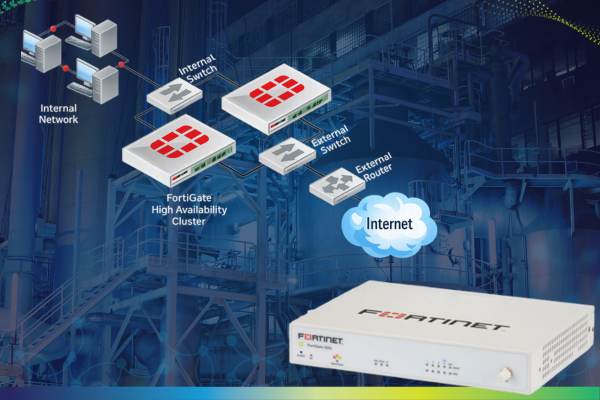
Using Fortinet hardware, the plant implemented a redesigned ring‑topology network supported by high‑availability FortiGate firewalls. The upgrade delivered zero downtime during migration, 100% uptime post‑deployment, improved data integrity, stronger security, and a cost‑effective installation completed under budget.
Read the full story to see how this upgrade strengthened visibility, boosted resilience, and provided a scalable platform for future technologies.
In recent years, organizations across manufacturing, energy, and critical infrastructure have found themselves confronting a new reality: the systems that keep their physical operations running are now prime targets for cyber attackers. These systems—collectively known as Operational Technology (OT)—were once isolated, stable, and protected simply by virtue of being offline. Today, however, increased connectivity, remote access, IT/OT convergence and the lack of security by design have made OT environments vulnerable in ways never seen before. The stakes are high; a cyber incident in OT doesn’t unlike IT just doesn’t threaten data. It threatens safety, uptime, revenue, and in some cases, human life.
Below we walk through the core elements of OT cybersecurity, illustrating each concept with real‑world context and the lessons organizations have learned the hard way.
Technology That Touches the Physical World
Operational Technology encompasses the hardware and software that directly control industrial processes—programmable logic controllers (PLCs), distributed control systems (DCS), human‑machine interfaces (HMIs), and supervisory systems like SCADA. These systems run production lines, regulate pipelines, manage power grids, and control water treatment plants.
Unlike traditional IT systems, which handle data, communication, and business operations, OT systems directly manipulate physical equipment. A misconfigured OT device doesn’t just corrupt a spreadsheet—it can halt a refinery unit, overload a turbine, or change chemical dosing levels. This physical impact makes OT environments uniquely sensitive to downtime and deeply reliant on availability and consistency.
Why OT Cybersecurity Has Become a Business Imperative
A decade ago, OT attacks were rare as systems were segregated islands. Today, they’re frequent, opportunistic, and increasingly destructive. As organizations connected OT environments to corporate networks and enabled remote access for efficiency, attackers gained new pathways into formerly isolated systems.
OT cyber incidents can lead to:
Significant safety hazards that endanger workers or the public
Extended operational outages that halt production
Massive financial losses, often costing millions per day
Regulatory violations, especially in energy and critical infrastructure
Damage to physical equipment, sometimes beyond repair
The consequences of an OT breach go far beyond data theft—they disrupt the real world. Understanding that distinction is the starting point for a modern OT cybersecurity strategy
IT and OT: Two Worlds with Different Rules
One common misconception is that OT environments can be secured using the same tools and principles used in IT. In practice, the two domains operate under very different constraints.
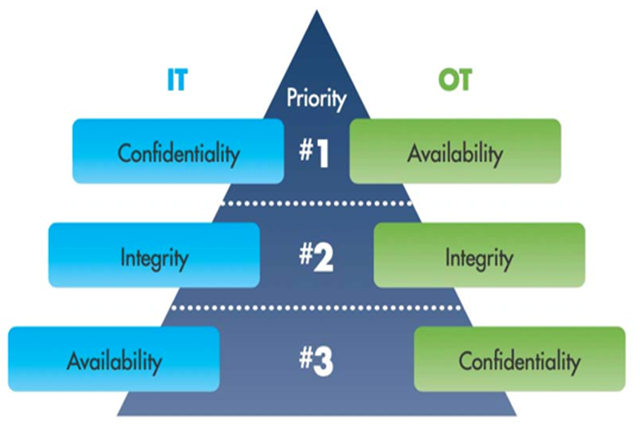
In IT, confidentiality is the top priority; protecting sensitive information is paramount. Systems are built to accommodate frequent patching, upgrades, and change management. The lifecycle of an IT asset is typically three to five years.
OT systems, by contrast, put safety and availability first. Downtime can stop production lines and compromise physical safety. Some industrial devices remain in operation for 20 or even 30 years, and updating them is often complicated, costly and risky. Attempting to apply aggressive IT‑style patching in OT can and will bring operations to a halt.
Key Differences:
Focus: IT focuses on data security, while OT focuses on the functionality and reliability of physical processes and devices.
Threats: IT threats often target data and financial assets, whereas OT threats can lead to physical damage, safety risks and operational downtime.
Understanding these differences is crucial. Security measures must be tailored to the operational realities of industrial systems—not imposed on them.
A Threat Landscape Designed to Exploit Weak Points
The threats facing OT environments today are varied, sophisticated, and capable of causing real‑world disruption.
Malware designed for ICS environments
The Stuxnet malware demonstrated that attackers are crafting highly specialized code targeting PLCs and industrial automation systems. Similarly, Triton went after safety instrumented systems (SIS), attempting to disable the very devices designed to protect human life.
Ransomware hitting critical infrastructure
Attacks like the Colonial Pipeline incident revealed how criminal groups can force entire industries into shutdowns. Even if OT systems aren’t directly impacted, ransomware affecting IT systems can disrupt OT operations due to interdependence.
Remote access and third-party vulnerabilities
Third‑party vendors and contractors frequently access OT networks, sometimes with minimal oversight. Compromised credentials, unsecured or poorly managed remote access portals have become one of the most common attack vectors.
These incidents highlight an essential truth: OT threats aren’t hypothetical—they’re active and evolving.
Frameworks, Models, and Strategies That Shape your OT Cybersecurity Roadmap
To navigate the complexity of securing OT environments, organizations increasingly rely on structured frameworks and industry standards. Use each of these to construct a risk-based OT Cybersecurity Roadmap.
NIST and ISA/IEC 62443
These frameworks provide guidance on risk assessment, control implementation, incident response, and secure lifecycle management tailored for industrial systems.
The Purdue Enterprise Reference Architecture
The Purdue Model remains the most widely used segmentation structure in OT. It separates industrial systems into hierarchical layers—from field devices at Level 0 to enterprise systems at Level 5—making it easier to control communication flows and limit lateral movement during an attack.
Defense‑in‑Depth
Rather than relying on a single security control, defense‑in‑depth establishes multiple overlapping layers of protection. Firewalls, network monitoring, patch management, and strict access control work together to slow attackers, detect abnormal behavior, and prevent catastrophic failures even if one control is bypassed.
Utilizing frameworks, guidelines and a defense-in-depth approach will give organizations a blueprint for resiliency and a way to translate security goals into actionable practices.
OT Cybersecurity Best Practices
Organizations that succeed in strengthening OT security often focus on several foundational practices.
Governance, policies and procedures provide clear authority, accountability, and decision-making structure. They translate risk management and security objectives into repeatable, enforceable actions that reduce human error, align IT and OT teams, and enable resilient response to cyber incidents.
OT Cybersecurity training for associates is critical because human actions are one of the most common causes of OT incidents, and informed employees are far better equipped to recognize threats, follow secure practices, and avoid mistakes that could impact safety or operations. Effective training builds a strong security culture across teams, ensuring everyone understands their role in protecting critical systems and responding appropriately to cyber events.
Network segregation and segmentation is one of the most effective ways to prevent attackers from moving freely across systems. Segregating IT networks from OT network utilizing a DMZ (De-militarized zone) structure and segmenting OT assets into tightly controlled zones limits radius of a access and any breach.
Continuous monitoring is essential for visibility. Many OT attacks begin subtly—with abnormal traffic patterns, unexpected control system changes, or unauthorized device communications. Real‑time detection helps stop intrusions before they cause damage.
Secure remote access—including multi‑factor authentication, role‑based access, and hardened VPNs—helps ensure that only authorized individuals can reach critical systems.
Together, these practices form the backbone of a proactive OT cybersecurity program.
Key Takeaways
OT cybersecurity programs are no longer optional. As industrial environments continue to modernize and integrate with IT systems, the risks will only grow. Organizations that prioritize OT cybersecurity through frameworks like IEC 62443, segmentation models like Purdue, and practices like continuous monitoring position themselves to safeguard both digital and physical assets. More importantly, they ensure the safety, reliability, and continuity of the essential services that millions of people rely on every day.
Case Study: Leading Life Sciences company slashes timelines with One-Click Automation
This case study highlights how a global biopharma company automated GMP software change validation, cutting project timelines in half and improving compliance.
Overview
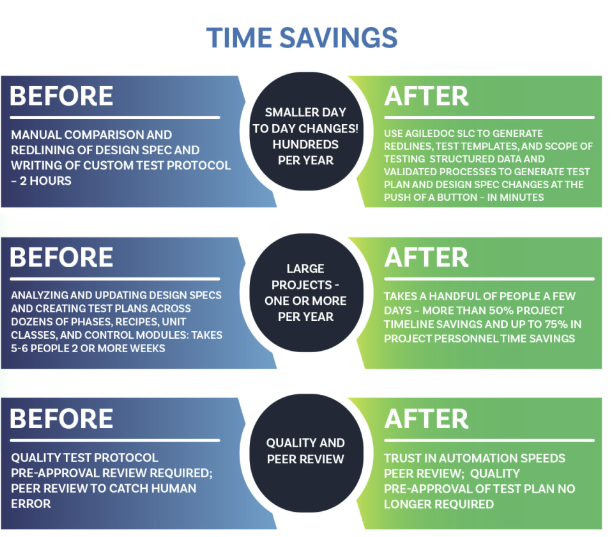
Under increasing pressure to improve the efficiency of GMP software change validation, the automation team at a leading global biopharmaceutical company partnered with Apperture Solutions to transform their specification and validation workflows. Initially deployed for control system elements, a solution based on Informetric’s AgileDoc System Lifecycle Management (SLC) has since been extended to cover manufacturing execution.
Prior to AgileDoc manual updates to design specifications and test plans took weeks and were susceptible to human error. With AgileDoc, the team established repeatable, validated procedures to generate redlines, update specifications, create test plans, and route them for approval—all in less than half the time for large projects, with even greater savings for routine changes.
“We use it for everything, all the time, always… Our ability to decrease project execution time has been more than worth the effort of implementation.” – Senior automation engineer
Discover the Details
See how a global biopharma leader cut validation timelines in half and accelerated production with AgileDoc.
“Just like with cruise control on your car, our operators don’t want to take it out of APC mode (nor do they have to), because it allows them to ride smoothly through the minor disruptions of the day.”
Ease Variations in Steam Header Pressure
This customer was looking for ways to optimize their production with Advanced Process Control using Model Predictive Control (MPC) technology. MPC is used to manipulate multiple variables—like boiler loads, turbine loads, and let-down valves—to maintain stable steam pressure and minimize steam venting or downgrading.
Leveraging this technology, the Apperture Solutions experts were able to:
Optimize economic targets for key equipment, energy flows, and fuels
Optimize how the high-pressure header is keeping up with steam demand across the facility
Optimize the pressure reducing valves to maintain the appropriate pressures for each steam header
To ensure continued results, we actively maintain the system every six months to fine-tune the model based on metrics and operator feedback.
Technical Expertise that Raises the Bar for User Satisfaction
For PLCs, SCADA, or any DCS, our consultants deliver factory automation services across all brands and industries, ensuring seamless control system integration and operation. We specialize in a full range of project execution and lifecycle services—from design, configuration & integration, and commissioning through ongoing operational support.
By leveraging our expertise, manufacturers gain improved system performance, reduced downtime, and enhanced operational insights.
PLC Configuration for all leading manufacturers, including Emerson, Siemens, Allen-Bradley/Rockwell Automation, Schneider Electric/Modicon, Mitsubishi Electric, Omron, and others.
Upgrades and Migration for existing PLC systems, as well as newer technologies to improve performance and reliability.
Installation, Start-up & Commissioning, and Qualification—everything you need to make sure your process comes online and operates as designed.
Control System Integration to supervisory, SCADA, data historian, and Edge devices, including Emerson DeltaV™, Movicon™, Inductive Automation Ignition®, Rockwell FactoryTalk® View, AVEVA Wonderware, Siemens WinCC, Schneider/Foxboro, and others.
Ongoing Support Services, regardless of vendor with guaranteed response times for emergencies, on-line monitoring, and routine services to optimize automation processes, enhance productivity, and ensure the reliability of manufacturing operations.
Trust Apperture Solutions to unlock the full potential of your automation systems.