

OT Asset Inventory & Visibility
Written by Steve Allison | Senior IT/OT Engineer
In our last edition, we discussed common OT cybersecurity threats and weaknesses. One issue frequently encountered during OT cybersecurity assessments is a lack of documentation and visibility into the assets connected within the OT environment. Organizations often invest in security technologies before fully understanding what systems they are trying to protect. Asset Inventory and Visibility are foundational elements of an effective OT cybersecurity program
Why Knowing Your Assets Is Important
Most OT environments have evolved over many years. Equipment has been added, controls systems have been upgraded, vendors have connected remotely, and networks have expanded to support business needs.
Over time, it becomes increasingly difficult to answer basic questions:
- What devices are connected to the network?
- Who owns them?
- What software and firmware are they running?
- Are they still supported?
When organizations lack visibility, cybersecurity becomes reactive instead of proactive.
An effective asset inventory helps organizations:
- Identify unknown or unmanaged devices.
- Understand where legacy systems exist.
- Prioritize cybersecurity investments based on critical assets.
- Improve incident response and recovery efforts.
- Support regulatory and compliance initiatives.
- Reduce operational and cybersecurity risk.
Tools and Techniques for Asset Discovery
Building an accurate inventory starts with asset discovery.
Unlike traditional IT environments, many OT systems are sensitive to excessive network traffic, making visibility solutions and discovery techniques an important consideration.
Common approaches include:
Passive Network Monitoring
Passive monitoring solutions observe communication already occurring on the network and identify devices without actively interacting with them.
These tools can help identify:
- PLCs and controllers
- HMIs
- Engineering workstations
- Historians
- Network infrastructure
- Industrial communication protocols
Passive monitoring is often the preferred approach because it minimizes operational risk while providing excellent visibility.
Active Discovery
In some cases, organizations may use active discovery methods to gather additional information about devices and systems.
This can provide details such as:
- Firmware versions
- Operating systems
- Device configurations
- Open ports and services
Active discovery should always be planned carefully within OT environments to avoid unintended disruptions.
Manual Validation
Technology alone rarely captures everything.
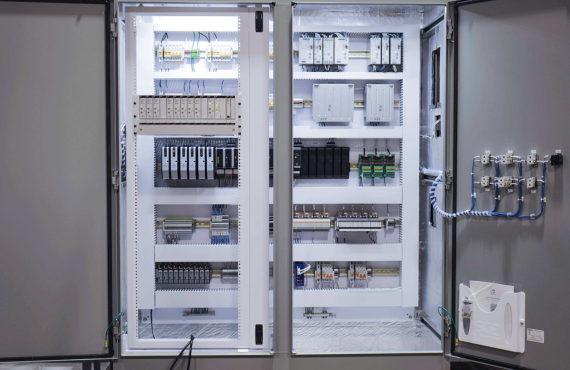
Site walkthroughs, engineering drawings, architecture reviews, and discussions with operations personnel often reveal assets that are disconnected, isolated, or simply undocumented. The most accurate inventories typically combine automated visibility with manual validation
Asset Management and Monitoring
Creating an inventory is not a one-time exercise.
OT environments are constantly changing. New systems are installed, old equipment is retired, firmware is updated, and vendors connect remotely to support operations.
Without ongoing monitoring, inventories quickly become outdated.
An effective asset management process should focus on:
Maintaining Accurate Asset Information
Organizations should track:
- Device type and function
- Manufacturer and model
- Firmware and software versions
- Network and physical location
- System owner
- Operational criticality
Monitoring for Changes
Changes often introduce risk.
Continuous monitoring can help identify:
- New devices appearing on the network
- Unauthorized configuration changes
- Unexpected communications
- Unsupported or end-of-life equipment
Supporting Other Cybersecurity Activities
Asset visibility strengthens many other cybersecurity initiatives by providing the information needed to:
- Perform vulnerability assessments
- Prioritize remediation efforts
- Design effective network segmentation strategies
- Respond to cybersecurity incidents more efficiently
- Support disaster recovery and business continuity planning
Organizations that maintain strong visibility are typically better positioned to make informed cybersecurity decisions and reduce operational risk.
Key Takeaway
Many organizations immediately think about firewalls, endpoint protection, or monitoring solutions when discussing cybersecurity. While those technologies are important, they are far more effective when built upon an accurate asset inventory.
Asset visibility is more than a cybersecurity exercise. It provides the foundation for understanding risk, improving operational resilience, and making informed decisions about the systems that keep operations running.